
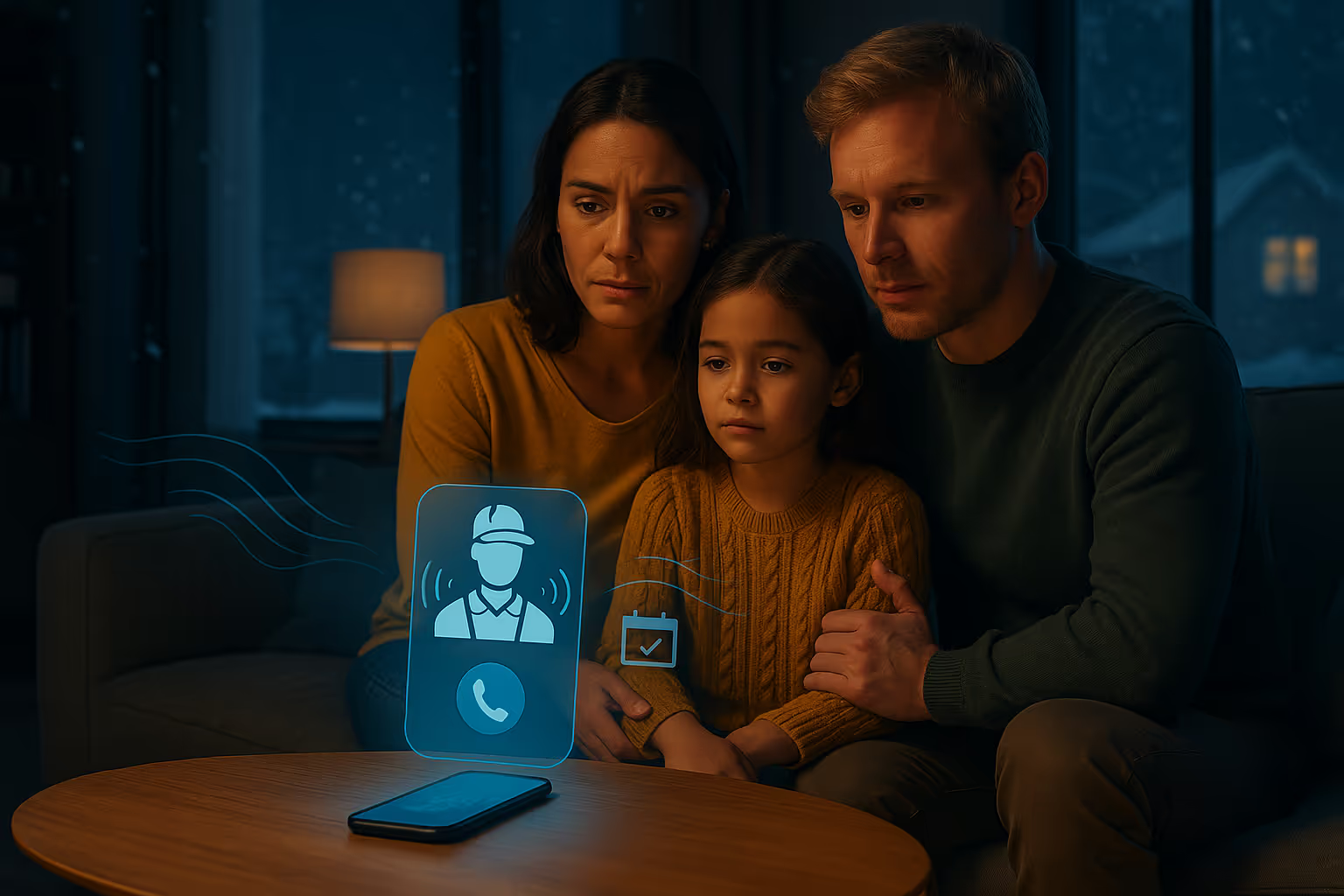
Your HVAC technician just wrapped up a furnace repair when three emergency calls come in simultaneously. It's 8 PM on a freezing winter night, your office staff went home hours ago, and each caller needs immediate help. By the time you return the first call, the other two customers have already contacted your competitor.
For HVAC companies, missing emergency calls means leaving customers without heat in winter or cooling in summer when they need help most. But what if you could answer every emergency call instantly, qualify the urgency, and dispatch technicians automatically, even at 3 AM?
TLDR
HVAC companies using AI phone answering services can capture up to 40% more emergency calls by providing instant around-the-clock response, automatically triaging urgent requests, and dispatching technicians without human intervention.
This technology transforms after-hours operations, turning missed calls into booked jobs while reducing response times from hours to seconds during critical service situations.
The emergency call challenge for HVAC businesses
Emergency HVAC calls follow unpredictable patterns that make them particularly challenging to manage. According to the Air Conditioning Contractors of America, HVAC emergency calls spike by up to 200% during extreme weather events, often overwhelming traditional answering services.
The financial impact of missed emergency calls hits HVAC companies especially hard. Emergency service calls typically command premium rates, often 1.5 to 2 times regular service charges. When you factor in the lifetime value of a customer gained through emergency service, each missed call could represent thousands of dollars in lost revenue.
Traditional solutions like after-hours answering services or on-call rotations create their own problems:
- Human answering services often lack technical knowledge to properly triage HVAC emergencies
- On-call staff experience burnout from constant interruptions
- Response delays occur when staff must wake up, assess the situation, and call customers back
- Important details get lost in translation between answering services and technicians
How AI phone answering captures more emergency calls
Modern AI phone answering technology specifically addresses the unique demands of HVAC emergency response. Different to traditional answering services, AI systems provide instant, knowledgeable responses that can differentiate between a true emergency and a routine service request.
The technology works through sophisticated natural language processing that understands HVAC-specific terminology and can ask the right diagnostic questions. When a customer calls about a heating failure, the AI can determine whether it's a complete system shutdown requiring immediate attention or a thermostat issue that might be resolved over the phone.
AI Receptionist capabilities for HVAC emergency response
An AI receptionist designed for HVAC companies goes beyond basic call answering to provide intelligent emergency triage and response.
Instant emergency assessment
The system can quickly evaluate emergency severity by asking targeted questions:
- Is your heating/cooling completely non-functional?
- Are there any unusual smells or sounds?
- Do you have elderly residents or young children in the home?
- Have you noticed any water leaks or electrical issues?
Based on responses, the AI prioritizes calls and routes them appropriately, ensuring true emergencies receive immediate attention.
Automated technician dispatch
Once an emergency is confirmed, the AI can:
- Check technician availability in your scheduling system
- Send automated alerts to on-call staff with all relevant details
- Provide customers with realistic arrival timeframes
- Create detailed service tickets with preliminary diagnostic information
This call automation eliminates the delay between call receipt and technician dispatch, often reducing response times from hours to minutes.
Smart call screening and qualification
Not every after-hours call is a true emergency. AI call screening for home service businesses helps HVAC companies filter calls effectively, identifying which situations require immediate response versus those that can be scheduled for regular hours. This prevents unnecessary after-hours dispatches while ensuring genuine emergencies receive prompt attention.
AI Phone Answering Service integration with HVAC systems
Modern AI phone answering services integrate seamlessly with popular HVAC business management platforms.
This integration with CRM systems ensures that emergency call data flows directly into your existing workflows.
ServiceTitan integration
For HVAC companies using ServiceTitan, the AI can:
- Create emergency tickets with proper priority flags
- Access customer history to identify warranty status and service agreements
- Check equipment details and past repair history
- Schedule appointments directly on the dispatch board
Inventory and parts management
During emergency calls, the AI can reference common HVAC part requirements and even check inventory availability. This helps technicians arrive prepared with the right parts, improving first-call resolution rates.
Customer communication automation
After capturing an emergency call, the system continues working:
- Sends confirmation texts with technician details and ETA
- Provides updates if schedules change
- Follows up after service to ensure the issue was resolved
- Requests reviews from satisfied emergency customers
Setting up emergency protocols in your AI system
Implementing effective emergency response requires careful configuration of your AI booking system.
Define emergency criteria
Work with your team to establish clear emergency definitions:
- Complete system failures during extreme weather
- Gas leaks or electrical hazards
- Water damage from system malfunctions
- Commercial clients with critical temperature requirements
Create escalation paths
Not all emergencies are equal. Set up tiered responses:
- Critical emergencies: Immediate technician dispatch plus management notification
- Urgent issues: Next available appointment with option for same-day service
- Non-emergency after-hours: Schedule for next business day with troubleshooting tips
Develop emergency scripts for call automation
Customize AI responses for common emergency scenarios. The system should provide immediate assistance while help is on the way:
- Safety instructions for gas leaks or electrical issues
- Temporary solutions for heating or cooling loss
- Shut-off valve locations for water leaks
- Troubleshooting steps for simple fixes
Measuring success and ROI
Track these metrics to evaluate your call automation's impact on emergency call capture:
Call metrics
- Percentage of after-hours calls answered (target: 100%)
- Average speed to answer (target: under 3 seconds)
- Call abandonment rate (target: under 2%)
- Conversion rate from emergency call to booked job
Business metrics
- Revenue from emergency services before and after implementation
- Customer acquisition through emergency services
- Average ticket value for emergency calls
- Customer retention rates for emergency service clients
Operational metrics
- Technician utilization during emergency hours
- False emergency dispatch rate
- First-call resolution rates
- Customer satisfaction scores for emergency service
HVAC companies typically see ROI within 2-3 months through increased emergency revenue and improved customer retention. The combination of never missing a call and providing superior emergency response creates a competitive advantage that compounds over time.
Best practices for HVAC emergency response
To maximize the effectiveness of your AI phone answering system for HVAC Companies for emergencies:
Maintain updated on-call schedules. Ensure your AI system always has current technician availability to provide accurate ETAs.
Regular system testing. Run monthly tests of emergency scenarios to ensure proper call handling and dispatch procedures.
Continuous optimization. Review emergency call recordings to identify areas for improvement in AI responses and triage accuracy.
Clear communication protocols. Establish how the AI should communicate with both customers and technicians during emergencies.
Backup procedures. Define fallback options if primary on-call technicians are unavailable.
Automate, improve and transform your emergency response today
Implementing an AI phone answering system for HVAC emergency calls fundamentally changes how you serve customers during their most critical moments. By capturing every emergency call, providing instant intelligent response, and automating dispatch, you can grow revenue while helping customers when they need it most.
The ability to handle multiple emergencies simultaneously, provide constant availability, and maintain high service quality makes an automated phone system essential for competitive HVAC companies. As extreme weather events become more common and customer expectations for instant response continue rising, the companies that invest in this technology now will capture market share from those still relying on outdated answering services.
Ready to stop missing lucrative emergency calls? Book a demo with Sameday today to see how our AI phone answering service can help your HVAC company capture 40% more emergency calls, automate your dispatch process, and instantly help your customers.


.svg)
.svg)