
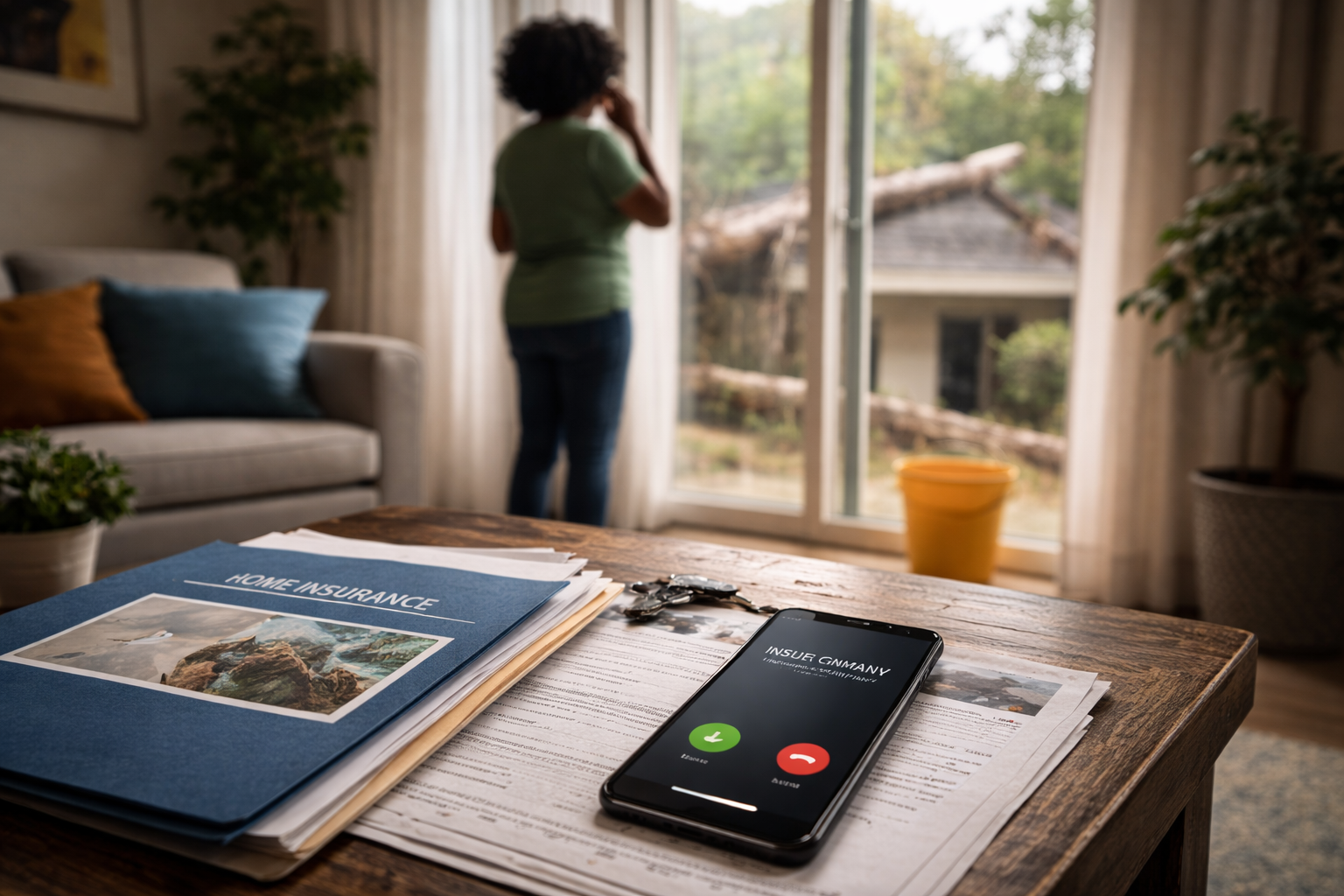
Every missed call is a missed job.
In home services, customers rarely wait. If no one answers, they call the next contractor. Many businesses try to solve this by either hiring more staff or installing AI. But choosing one over the other limits results.
The strongest lead conversion systems use both.
An AI receptionist for home services makes sure every call gets answered, information is captured, and appointments are booked fast. Humans focus on the calls that require trust, judgment, and real conversation. When these two work together, contractors stop losing leads and start converting more of them into paying jobs.
Why does a hybrid approach work better for lead conversion?
AI and humans are good at different things. AI never gets tired, answers instantly, and handles volume without breaking a sweat. Humans read emotions, build trust, and solve complex problems that AI cannot handle yet.
According to Martal Group research, AI-driven workflows yield a 27% increase in sales win rates and lower cost per lead by up to 33%. But that same research shows the best results come from combining AI automation with human expertise.
For home service companies, this means lead capture voice AI for home services handles the first contact while your team focuses on closing the job.
What should voice AI handle in your lead conversion process?
An AI receptionist for contractors works best for tasks that are repetitive, data-heavy, or time-sensitive.
Answering every call instantly
When customers call, they want answers now. Waiting on hold or getting voicemail sends them to the next contractor. AI picks up on the first ring every time, day or night.
Booking routine appointments
Someone calling to schedule a furnace tune-up or drain cleaning does not need a human. The AI asks what they need, checks your calendar, and books them into an open slot in two minutes.
Collecting customer information
Name, address, phone number, service needed. The AI gathers this information systematically on every call. Nothing gets forgotten or missed.
Routing calls correctly
Emergency calls go to your on-call tech. Price questions get answered by the AI. Complex situations are transferred to your office staff. The system knows which path each call should take.
Following up automatically
Appointment reminders, post-service check-ins, and review requests all happen automatically. You do not need to remember to do them manually.
When do humans convert leads better than AI?
Some situations need a real person. Trying to force automated phone systems into these moments hurts conversion rates instead of helping them.
Upset or frustrated customers
When someone is angry about a botched job or a billing issue, they need empathy and problem-solving that AI cannot provide. Humans de-escalate situations and rebuild trust.
Complex or custom jobs
A homeowner describing extensive renovation work or a complicated repair needs to talk through details with someone who understands the work. AI can gather basic info, but a human needs to quote and sell the job.
High-value sales
Jobs worth thousands of dollars require relationship building. Customers want to talk to a real person before committing to major work. Humans close these deals better.
Technical troubleshooting
When a customer describes strange noises or intermittent problems, a technician needs to ask follow-up questions and dig deeper. AI cannot diagnose these issues remotely.
How does the handoff between AI and humans work?
The key to a home services answering service that converts well is smooth transitions. Customers should not notice when they move from AI to a human.
AI recognizes when to transfer
Good systems know their limits. When a call goes beyond routine booking or basic questions, the AI transfers smoothly to a person. The customer just hears "Let me connect you with someone who can help with that."
Information carries over
The human who picks up already has everything the customer told the AI. Name, address, problem description. The customer does not repeat themselves.
Humans can pull AI back in
After a human handles the complex part, they can send the customer back to AI to finish booking or get appointment confirmation. The system works both ways.
Customer journey mapping helps you design these handoffs so customers move smoothly through your process.
What does lead conversion look like with both AI and human support?
Here is how calls flow in a hybrid system for a plumbing company.
Scenario 1: Routine booking
A Customer calls about scheduling drain cleaning. The AI receptionist for contractors asks when they are available, books them into an open slot, and sends confirmation. Total time: 90 seconds. Human involvement: zero.
Scenario 2: Emergency with questions
Your Customer calls about a burst pipe. AI recognizes emergency keywords, gathers the address, and asks basic questions. Customer mentions homeowner's insurance coverage. AI transfers to office staff who can discuss insurance claims. Staff member handles that part, then sends the customer back to AI for appointment confirmation.
Scenario 3: Large project quote
A Homeowner wants to replumb their whole house. AI collects contact info and basic project details. Immediately transfers to your estimator, who schedules an in-person assessment. The estimator gets the lead info before they even pick up the phone.
Each situation uses AI and humans where they work best. Nothing falls through the cracks.
How much does the hybrid approach improve conversion rates?
Numbers vary by business, but the pattern is consistent. Hybrid setups convert more leads than AI-only or human-only approaches.
According to Martal data, companies using conversational AI for initial lead capture combined with human follow-up see significantly better results than traditional methods alone.
Here is what changes for most home service contractors:
- Answer rate goes to nearly 100% because AI picks up every call.
- Booking speed increases because routine appointments happen in minutes instead of hours.
- High-value job conversion improves because humans focus only on leads worth their time.
- After-hours leads get captured instead of being lost to voicemail.
- Follow-up happens consistently because AI handles it automatically.
The AI phone agent for home services, working alongside your team, captures and converts leads your business would otherwise miss.
What systems do you need to make this integration work?
The technology side is simpler than it sounds.
Cloud-based phone system
Your business number routes calls through software that can seamlessly split calls between AI and humans.
AI answering platform
This handles the initial call, asks questions, and decides whether to book, answer, or transfer.
Scheduling software
Your calendar needs to connect to the AI so bookings happen in real time without double-bookings.
CRM integration
Every call updates customer records automatically. Your team has access to the full history before talking to anyone.
Most platforms combine these pieces now. You do not need to cobble together separate tools. Setting up automated appointment scheduling includes all these components working together.
How do you train your team to work with voice AI?
Your staff needs to understand how the system works and trust it to do its job.
Show them the AI workflow
Let staff listen to how AI handles calls. They should know what questions it asks and when it transfers to humans.
Define clear roles
AI handles routine bookings and basic questions. Humans handle complex situations, upset customers, and high-value sales. Everyone knows their lane.
Review call analytics together
Look at which calls AI handled completely versus which ones needed human help. This shows the value AI provides and where your team makes the real difference.
Celebrate the wins
When the hybrid system books jobs that would have gone to voicemail before, point it out. Your team should see this as a tool that helps them succeed, not a threat to their jobs.
Does this work for small home service businesses?
Yes. Small businesses actually benefit most from the hybrid approach because they have the least capacity to answer calls all day.
If you are a solo HVAC tech or a small plumbing company with two trucks, you cannot sit by the phone during the workday. The automated phone system answers for you while you work on jobs.
When a call needs human attention, it routes to your mobile phone or office staff. Simple calls get handled without bothering you at all.
Small contractors using this approach report booking 30% to 50% more jobs because they stop missing calls during busy times.
How quickly can you implement a hybrid system?
Most home service companies get operational in one to two weeks.
Week 1: Setup
Pick your platform, port your phone number, connect your scheduling software, and configure basic call flows.
Week 2: Testing and training
Make test calls to verify everything works correctly. Train your team on how to use the system. Go live with real customers.
Some businesses start by running AI during after-hours only. Once they see it working, they expand to business hours too. This gradual approach builds confidence.
Speed to lead for roofing companies and other home services improves immediately once the hybrid system goes live.
Getting started with hybrid lead conversion
The best lead conversion systems for home services use both an AI phone agent and human support. AI handles speed and volume. Humans handle complexity and relationships. Together, they capture and convert more leads than either approach alone.
Start by identifying which calls your team struggles to answer. Those are perfect for AI. Keep humans focused on calls where they add the most value. The result is more jobs booked without working longer hours.
For plumbing, HVAC, and roofing contractors ready to stop missing opportunities, the hybrid approach delivers results that neither AI alone nor humans alone can match.
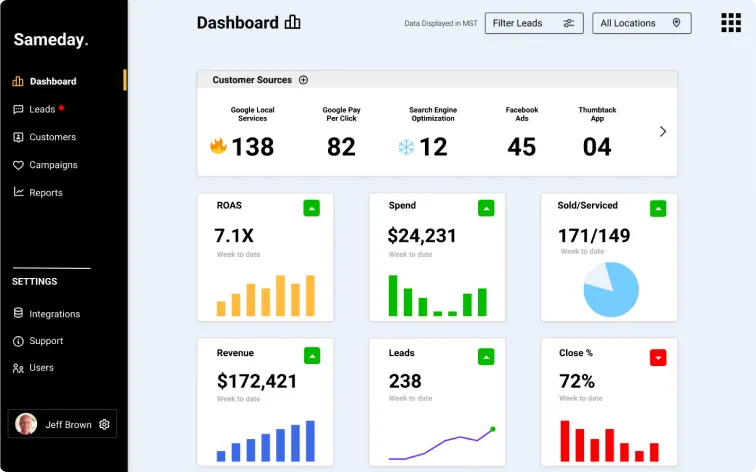
Book a demo with Sameday and see how combining AI with your team creates a lead conversion system that books more jobs while your staff focuses on the work that actually requires human expertise.

.svg)
.svg)