
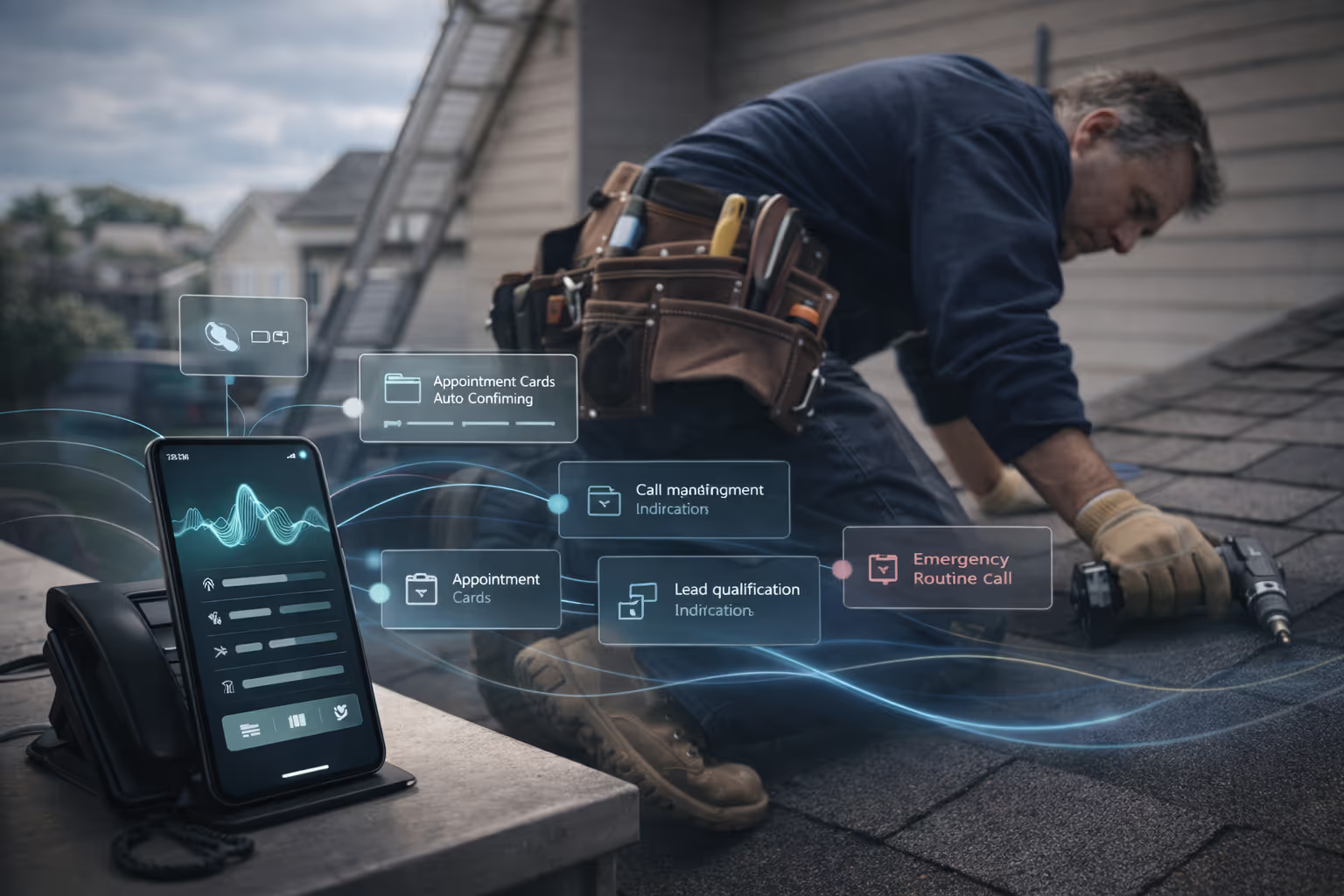
On busy days you might have multiple crews in the field, emergency calls flooding in, and your office manager on the phone lines while trying to dispatch technicians. For home service businesses, managing incoming calls while delivering quality service is hard. But an automated phone system for home services changes this reality, turning chaos into streamlined efficiency.
Whether you run an HVAC company, plumbing service, roofing business, or any other home service trade, your phone is your lifeline to revenue. But traditional phone handling methods can't keep pace with modern customer expectations and business demands. Today's AI answering service technology offers a solution that answers every call, books appointments automatically, and integrates seamlessly with your existing operations.
TLDR
An automated phone system for home services delivers measurable benefits across HVAC, plumbing, roofing, and other trades by handling multiple calls simultaneously, booking appointments around the clock, and reducing operational costs by up to 60%. Modern systems use AI to qualify leads, dispatch based on technician availability, and integrate with field service management platforms. Contractors using automated phone systems report capturing 30-40% more leads, improving customer satisfaction scores, and freeing staff to focus on revenue-generating activities rather than phone management.
Traditional phone handling in home services is a challenge
According to research from BIA Advisory Services, small businesses miss an estimated $75 billion in annual revenue due to unanswered calls. For home service companies, this problem is particularly acute during emergency situations and peak seasons when call volumes spike unexpectedly.
The traditional phone handling challenges include:
- Limited capacity: One receptionist can only handle one call at a time
- Business hours restrictions: Missing after-hours emergency opportunities
- Inconsistent information: Different staff members provide varying responses
- Manual data entry: Time wasted transferring call information to your CRM
- High labor costs: Hiring, training, and retaining quality phone staff
These limitations don't just cost money; they frustrate customers who expect immediate responses in urgent situations. An automated phone system eliminates these bottlenecks while providing consistent, professional service around the clock.
How call automation transforms different home service trades
HVAC companies: Managing seasonal surges
HVAC businesses experience dramatic call volume swings. During the first heatwave or cold snap, call volumes can increase 300% or more. Traditional staffing can't scale this quickly, leading to missed opportunities and frustrated customers.
Call automation benefits for HVAC include:
- Handling unlimited simultaneous calls during peak periods
- Triaging emergency no-heat/no-cool situations for priority dispatch
- Scheduling routine maintenance during slower periods
- Capturing equipment model numbers and problem descriptions
- Offering membership plan information consistently
The AI for HVAC companies recognizes keywords like "no air conditioning" or "furnace not working" and routes these emergencies appropriately while scheduling routine tune-ups for optimal route efficiency.
Plumbing services: 24/7 emergency response
Plumbing emergencies don't follow business hours. A burst pipe at 2 AM needs immediate attention, and the plumber who answers gets the job. Virtual receptionist technology ensures you never miss these high-value emergency calls.
Specific advantages for plumbers:
- Identifying true emergencies (water damage, sewer backups) versus routine requests
- Collecting detailed problem information for better first-visit preparation
- Dispatching on-call technicians for after-hours emergencies
- Providing basic troubleshooting steps while help is en route
- Capturing photos through text for visual problem assessment
Studies show that businesses can't afford phone system downtime, especially in emergency services where response time directly impacts revenue and reputation.
Voice AI for roofing contractors: Storm response and lead management
Roofing companies face unique challenges with sudden storm-driven demand and long sales cycles. After severe weather, hundreds of homeowners might call within days, overwhelming traditional phone systems.
Call automation helps roofing contractors by:
- Managing high-volume storm damage inquiries efficiently
- Qualifying leads based on damage type and insurance coverage
- Scheduling inspections geographically for route optimization
- Following up on estimates automatically
- Coordinating with insurance adjusters and homeowners
Electrical services: Safety-first communication
Electrical work requires careful screening to ensure safety and compliance. An automated system can gather critical information about electrical issues while emphasizing safety protocols.
Key benefits for electricians:
- Screening for dangerous situations requiring immediate response
- Verifying permit and inspection requirements
- Scheduling with an AI booking system based on job complexity and technician certifications
- Providing safety instructions for urgent situations
- Documenting symptoms for troubleshooting preparation
Core features of modern automated phone systems
Intelligent call routing and prioritization
Not all calls are equal. A virtual receptionist system can analyze caller intent and route accordingly:
- Emergency calls go directly to on-call technicians
- Sales inquiries route to available estimators
- Existing customers get priority handling
- Warranty calls connect to service managers
- Billing questions transfer to accounting
This intelligent routing happens instantly, without making callers navigate complex phone menus or wait on hold.
Natural conversation flow
Modern AI booking system technology uses natural language processing to have real conversations, not robotic interactions. Callers can explain their problems naturally, and the system understands context and intent.
For example, when a caller says, "My AC is making a weird noise, and it's not cooling properly," the system recognizes:
- Service type needed (AC repair)
- Urgency level (high during summer)
- Diagnostic information (noise complaint, cooling issue)
- Scheduling priority (expedited service recommended)
Real-time scheduling and dispatch
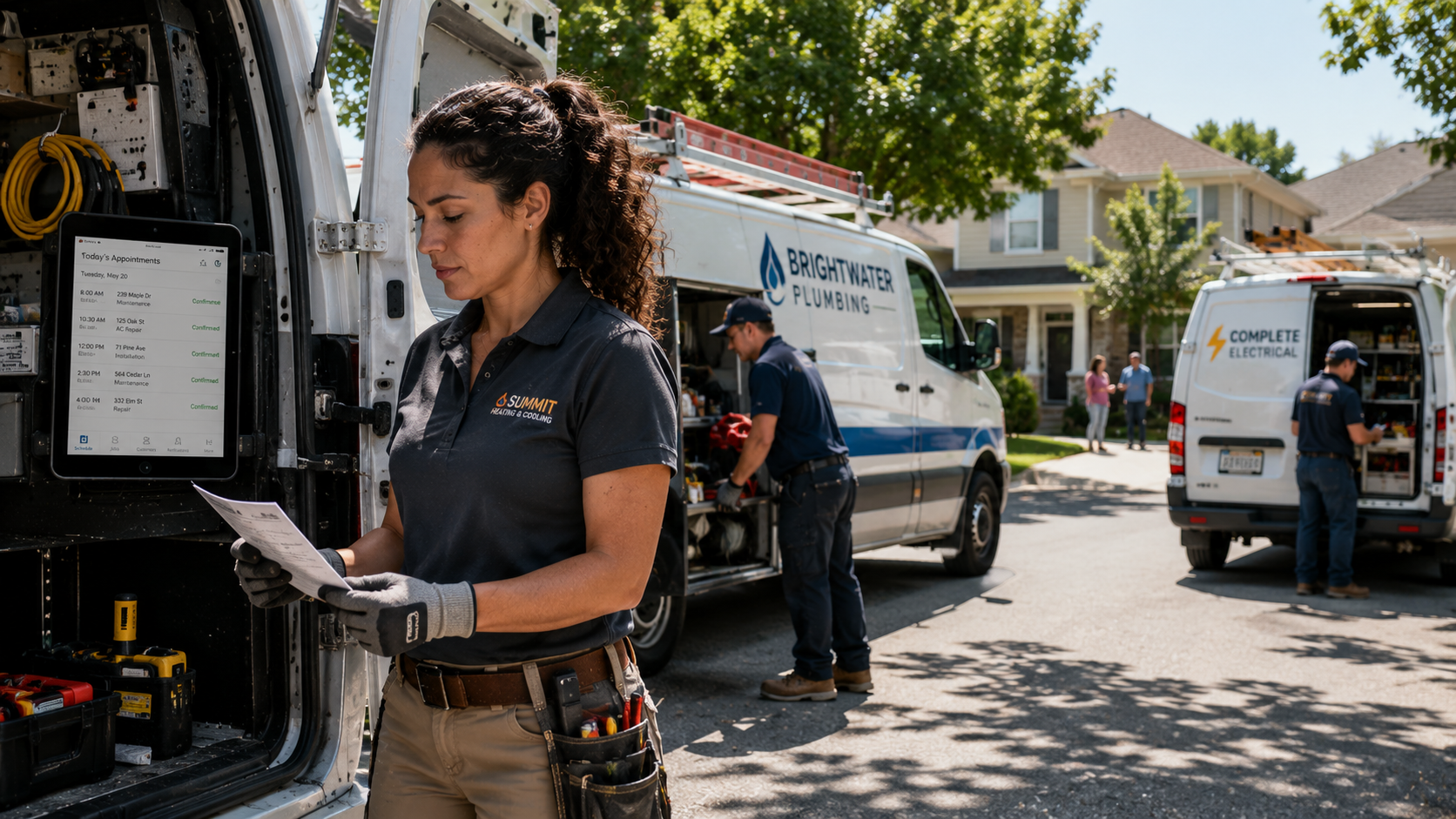
The best automated phone systems integrate directly with your field service management software. Whether you use ServiceTitan, Housecall Pro, or another platform, the system should:
- Check technician availability in real-time
- Book appointments based on territory and skills
- Update job details automatically
- Send confirmation texts and emails
- Add notes and special instructions
This integration eliminates double-booking, reduces travel time, and ensures the right technician arrives prepared for each job.
Measuring success: Key metrics for automated phone systems
Operational efficiency gains
Track these metrics to quantify efficiency improvements:
- Call answer rate: Should exceed 95% (versus 60-70% industry average)
- Average speed to answer: Under 3 seconds
- First-call resolution: 80%+ for standard requests
- Booking conversion rate: 70%+ for qualified leads
- Staff time saved: 20-30 hours per week on phone handling
According to data from Marchex, phone calls convert to customers 10-15 times more than web leads, making every answered call critical for growth.
Financial impact
Measure the bottom-line benefits:
- Cost per booked appointment (typically reduced by 50-70%)
- Revenue from after-hours calls captured
- Reduced labor costs for phone handling
- Lower customer acquisition costs
- Increased average ticket size through consistent upselling
Many contractors find that capturing just 10-15 additional jobs monthly through better phone handling covers the entire system cost.
Customer satisfaction improvements
Monitor customer experience metrics:
- Reduced hold times and transfers
- Faster appointment booking
- Improved first-call resolution
- Higher online review scores
- Increased customer retention rates
Customers appreciate quick, efficient service. An automated phone system for home services delivers this consistently, building loyalty and generating referrals.
Implementation strategies for maximum impact
Phase 1: After-hours coverage
Start by implementing your automated phone system for after-hours calls. This immediately captures revenue you're currently missing without disrupting existing operations. Most businesses see ROI within 30-60 days from after-hours opportunities alone.
Phase 2: Overflow and peak handling
Next, use the system to handle overflow during busy periods. When all staff members are on calls, the automated system answers additional lines, ensuring no caller gets a busy signal or endless hold music.
Phase 3: First-line response
Once comfortable with the system's performance, make it your primary call handler. The AI can handle 70-80% of routine calls completely, transferring only complex situations to human staff.
Phase 4: Proactive outreach
Advanced implementations use call automation for:
- Appointment reminders and confirmations
- Service agreement renewals
- Maintenance scheduling
- Customer satisfaction surveys
- Payment collection calls
Choosing the right virtual receptionist solution
When evaluating automated phone systems, consider these essential factors:
Industry specialization: Generic systems lack the specialized knowledge needed for home services. Choose solutions built specifically for contractors that understand your terminology, services, and workflows.
Integration depth: The system should integrate fully with your existing software stack, not just basic call logging. Look for two-way sync with your CRM, real-time availability checking, and automatic job creation.
Scalability: Your phone system should grow with your business without complexity or dramatic cost increases. Whether you receive 50 or 5,000 calls monthly, the system should handle volume seamlessly.
Customization options: Every business operates differently. The platform should adapt to your specific services, pricing, territories, and business rules.
Performance transparency: Legitimate providers share real metrics and case studies. Ask for specific examples from similar businesses in your trade.
Industry-specific considerations
For franchise operations
Franchises need systems that maintain brand consistency while allowing location-specific customization. The automated phone system should:
- Follow corporate scripts and standards
- Route calls to specific franchise locations
- Track performance across multiple units
- Maintain pricing and service consistency
For multi-trade businesses
Companies offering multiple services (like plumbing and HVAC, or roofing and solar) need intelligent service routing. The system should identify which service the caller needs and route to the appropriate team.
For growing companies
Scaling businesses benefit from systems that:
- Add new service areas easily
- Onboard new technicians quickly
- Adjust capacity automatically
- Provide detailed analytics for decision-making
Transform your home service business with intelligent automation
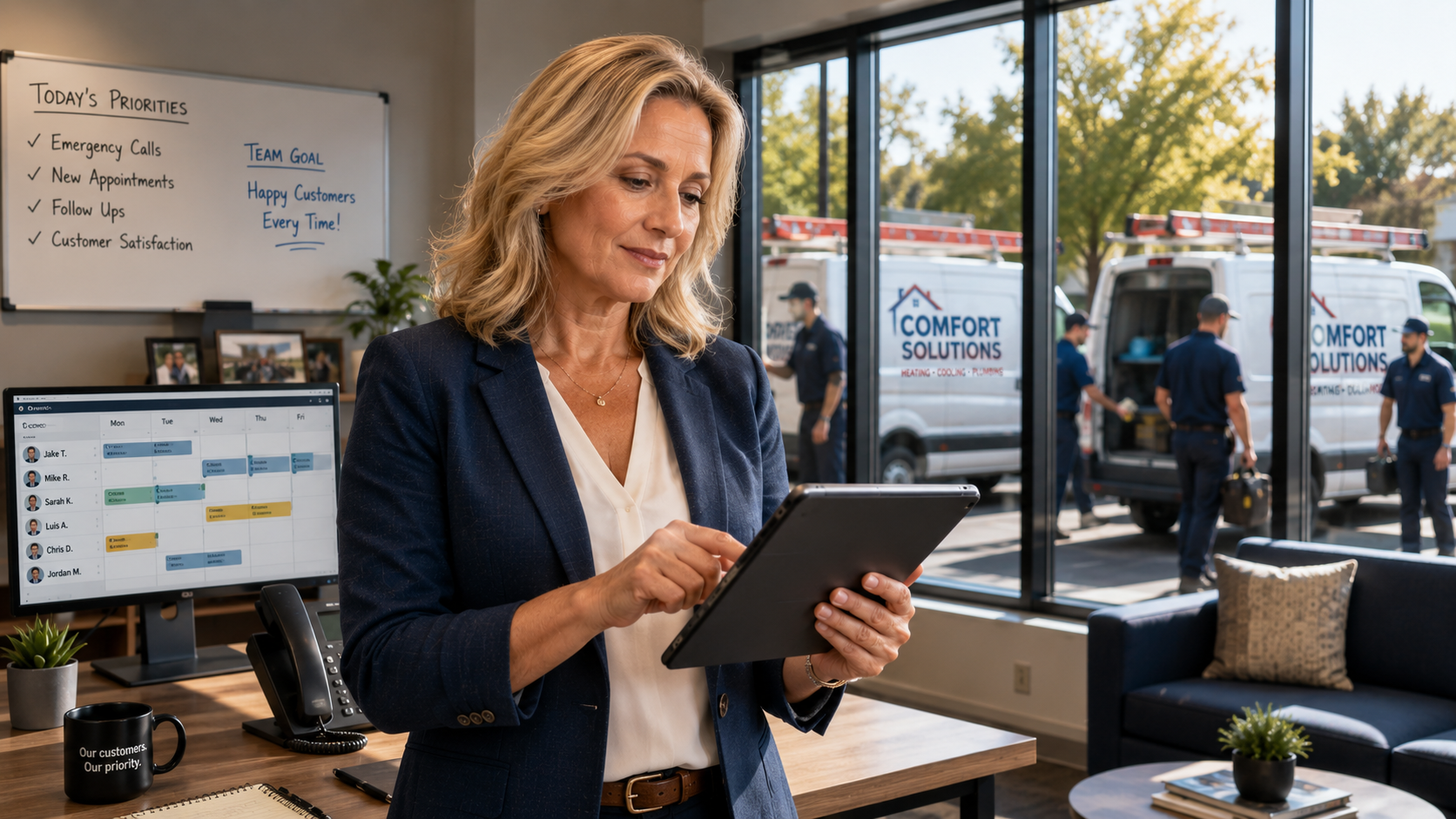
The home service industry is evolving rapidly. Customers expect immediate response, professional service, and seamless scheduling. Companies still relying on traditional phone handling struggle to meet these expectations while managing costs and growth.
An automated phone system for home services isn't just about answering more calls; it's about transforming how you interact with customers and operate your business. By implementing modern call automation, you can capture every opportunity, improve customer satisfaction, and free your team to focus on what they do best: delivering exceptional service.
The benefits are clear across every trade. HVAC companies handle seasonal surges effortlessly. Plumbers never miss emergency calls. Roofers manage storm responses efficiently. And every home service business improves profitability while reducing stress on staff.
Ready to modernize your phone operations and accelerate growth?
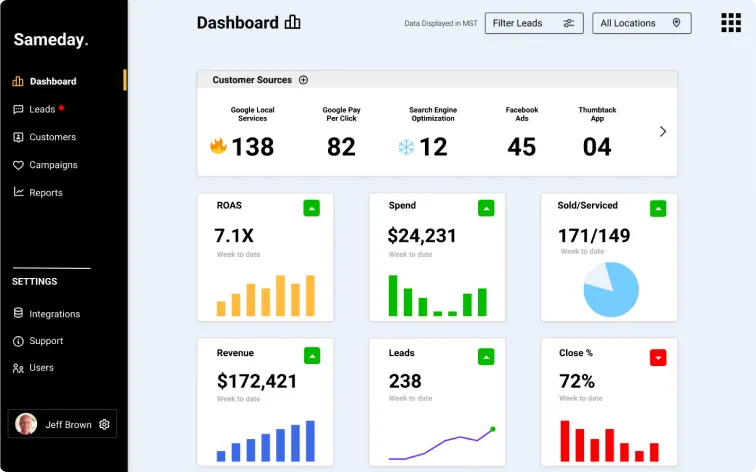
Book a demo with Sameday today to see how our specialized AI voice agent for home services can transform your business, capture more leads, and deliver the responsive service your customers expect.

.svg)
.svg)