
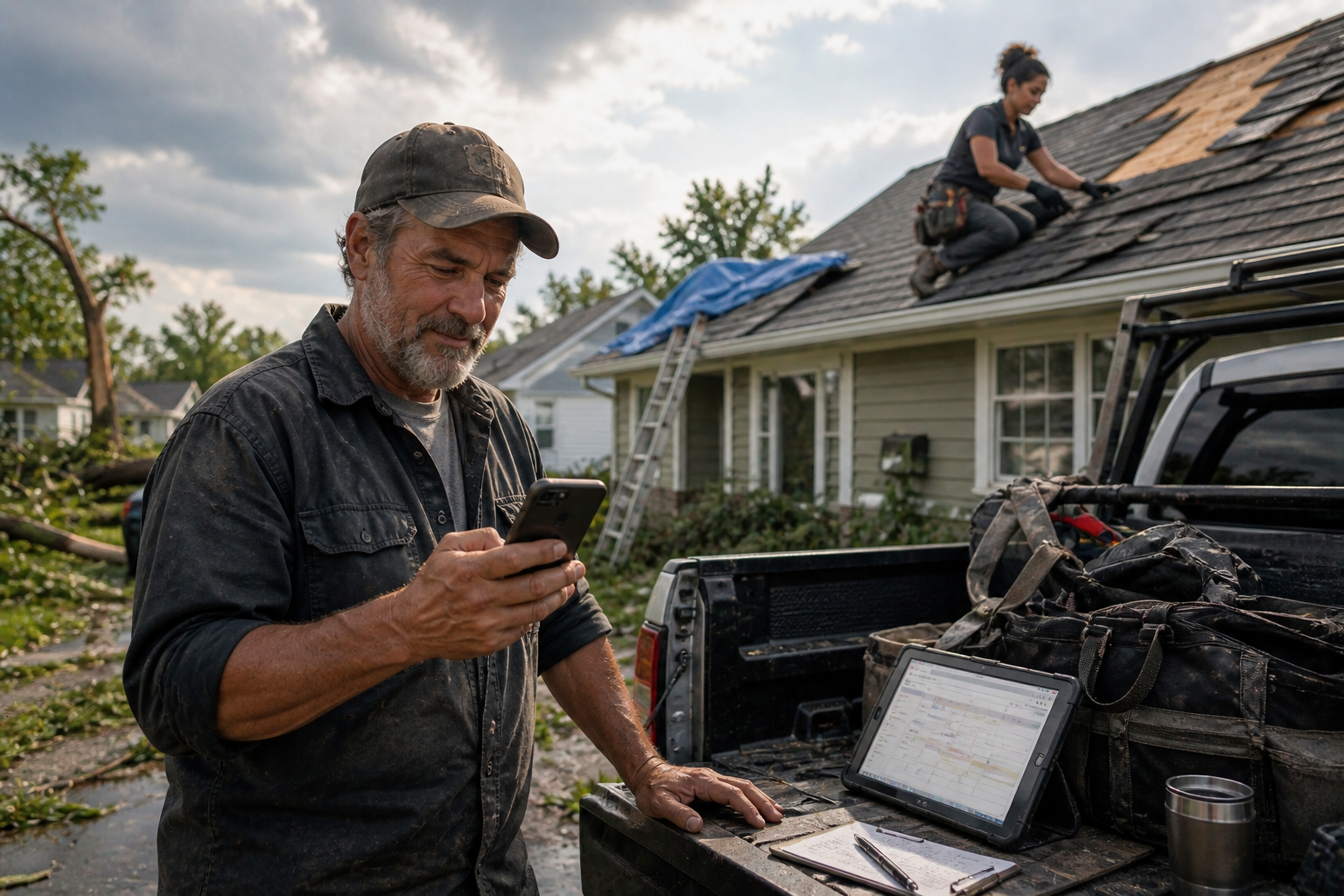
Roofing is one of the few trades where a single missed call can cost you five figures. A residential re-roof runs $8,000 to $25,000. A storm damage job with insurance can go higher. When a homeowner calls and nobody picks up, they do not leave a voicemail and wait. They call the next roofer on the list.
That is the core problem a roofing answering service solves. But not all of them solve it equally well. This article breaks down what separates a genuinely useful answering service from one that just takes messages and leaves your team to do the rest.
Why roofing companies lose more calls than most trades
Roofing crews are on rooftops. Owners are in the field. Office staff, if you have them, are stretched during peak season. The phone does not get answered every time, even when you intend it to.
According to Invoca's research on home service businesses, home service companies miss around 27% of inbound calls on average. In roofing, that number climbs during storm season when call volume spikes and staff are overwhelmed at exactly the wrong moment.
The problem gets worse when you look at what those calls are worth. Missing 10 calls in a month with an average job value of $10,000 is a $100,000 problem, before you account for referrals those customers would have sent.
What does speed to lead actually mean for roofers?
Speed to lead is the time between when a homeowner reaches out and when your company responds. In roofing, it is one of the most important numbers in your business.
Research from JobNimbus shows that 78% of customers choose the first company to respond to their inquiry, often setting aside price differences to do it. Leads contacted within five minutes are 21 times more likely to convert than leads reached after 30 minutes.
Most roofing companies cannot hit that window consistently. An AI phone answering system for home services can. It picks up in seconds, qualifies the caller, and books the appointment while the homeowner is still on the line.
What types of roofing answering services exist?
Before picking a solution, it helps to understand what you are actually choosing between.
Live answering services use real human agents, usually at an offshore or shared call center. They answer your phone and take a message or follow a basic script. The quality varies. They do not integrate with your software, and someone on your team still has to follow up and book the job.
IVR systems route calls through a menu. Press 1 for scheduling, press 2 for billing. Homeowners with an urgent leak call the first roofer who sounds human and helpful. An IVR is not that.
AI phone agents for home services handle the full call. They speak naturally, qualify the job type, check your availability, and book directly into your field service software. No message to review. No follow-up step. The job is on your board before the call ends.
For roofing specifically, the AI option is what actually moves the needle on booking rate.
How does an AI receptionist for contractors handle roofing calls?
A well-configured AI receptionist for contractors knows how to handle the calls roofing companies actually get. That means asking the right questions upfront.
Is this storm damage or a standard replacement? Is the homeowner filing an insurance claim? What is the address and preferred inspection time? Are they a new customer or an existing one?
Those questions determine urgency, job type, and which technician to dispatch. A good AI captures all of that during the call and writes it directly to your CRM or field service platform. When your team looks at the schedule the next morning, the context is already there.
This is what separates an automated phone system for home services from a basic answering service. It does not just answer. It books, qualifies, and syncs.
Does it work for storm season call surges?
Storm season is where most roofing phone systems break down. A hail event in your market can triple call volume overnight. Your office staff cannot scale. A live answering service may not have enough agents. Calls pile up and homeowners move on.
An AI phone agent handles unlimited concurrent calls. It does not get overwhelmed. Every call gets answered in the same way, at 2pm on a Tuesday or 9pm on a Sunday after a weekend storm.
How roofing companies can use call automation covers this in more detail, but the short version is: the companies that capture storm leads are the ones with systems that scale automatically. Human staff cannot do that without significant hiring and training costs.
How to automate after-hours calls?
Most roofing companies send after-hours calls to voicemail. Most homeowners do not leave one.
An AI answering service runs 24/7. A homeowner who notices a leak at 8pm on a Friday can call, get qualified, and book an inspection for first thing Monday. That job is already on your board before your office opens.
Maximizing speed to lead with voice AI for roofing companies goes deeper on how that overnight booking flow works in practice.
How do you set up a roofing answering service properly?
Getting this right takes about a week of setup if you work with a provider who knows the trades. Here is what that process looks like.
Step 1: Define your job types and qualification questions
Write down the types of calls your team gets most often. Storm damage inspection. Full replacement quote. Repair for an existing customer. Insurance claim follow-up. Each one has different questions and different priority levels.
Step 2: Connect your field service software
The AI needs to write directly to your CRM or scheduling platform. If you use ServiceTitan, Jobber, Housecall Pro, or a similar platform, confirm the provider has a native integration. A third-party connector works but adds friction.
For context on what a CRM-connected answering service actually does during a call, how a voice AI answering service works with CRM integration explains the full flow.
Step 3: Set service area rules and availability windows
Tell the system which zip codes you cover, what hours your techs are available, and what job types you take. This prevents the AI from booking jobs you cannot fulfill.
Step 4: Forward your main number
Most operators forward their existing number to the AI rather than provisioning a new one. Customers call the same number they always have. The experience is seamless.
Step 5: Test with real scenarios
Run through the calls your team handles most. A first-time homeowner with hail damage. An existing customer asking about an insurance claim. A caller after hours. Verify the AI handles each one correctly before going live.
Step 6: Track booking rate weekly
Once you go live, watch your booking rate. A properly configured AI phone answering system should be booking over 85% of qualified calls. If you are below that, the issue is usually in the qualification flow or availability settings.
What should you look for when comparing providers?
When evaluating a roofing answering service, ask these questions before you commit.
Does it integrate natively with my software? A provider that connects directly to ServiceTitan or Jobber is faster to set up and more reliable than one that sends you a CSV to import.
What is the average booking rate across your customers? This is the clearest signal of whether the product works. A provider that cannot give you this number is one to walk away from.
Can it handle inbound, outbound, and SMS? Booking is only one part of the job. Reminders, follow-ups, and happy calls are also high-value tasks that a good AI can handle automatically.
What does pricing look like? AI answering service pricing in 2026 breaks down what to expect and how to compare cost against the revenue impact of answered calls.
What does setup and support look like? A provider that takes weeks to configure and offers slow support is not useful during storm season. Ask about average response time from the support team.
A practical checklist before you go live
Use this before switching on any roofing answering service.
- Job types and qualification questions are written out and loaded
- Field service software is connected and syncing in real time
- Service area rules and technician availability are configured
- Main phone number is forwarded to the AI
- After-hours coverage is active and tested
- Booking rate baseline is established so you can measure improvement
- At least three call scenarios are tested end to end
The bottom line
The best roofing answering service in 2026 is one that answers every call, qualifies every lead, books the job, and syncs it to your software automatically. Not one that takes a message and leaves your team to close the loop.
If you are losing calls during storm season, sending after-hours leads to voicemail, or relying on office staff to manually enter job details, you are leaving real money on the table every week.
Book a demo with Sameday to see how the AI handles your calls, connects to your CRM, and starts booking roofing jobs from day one.


.svg)
.svg)