
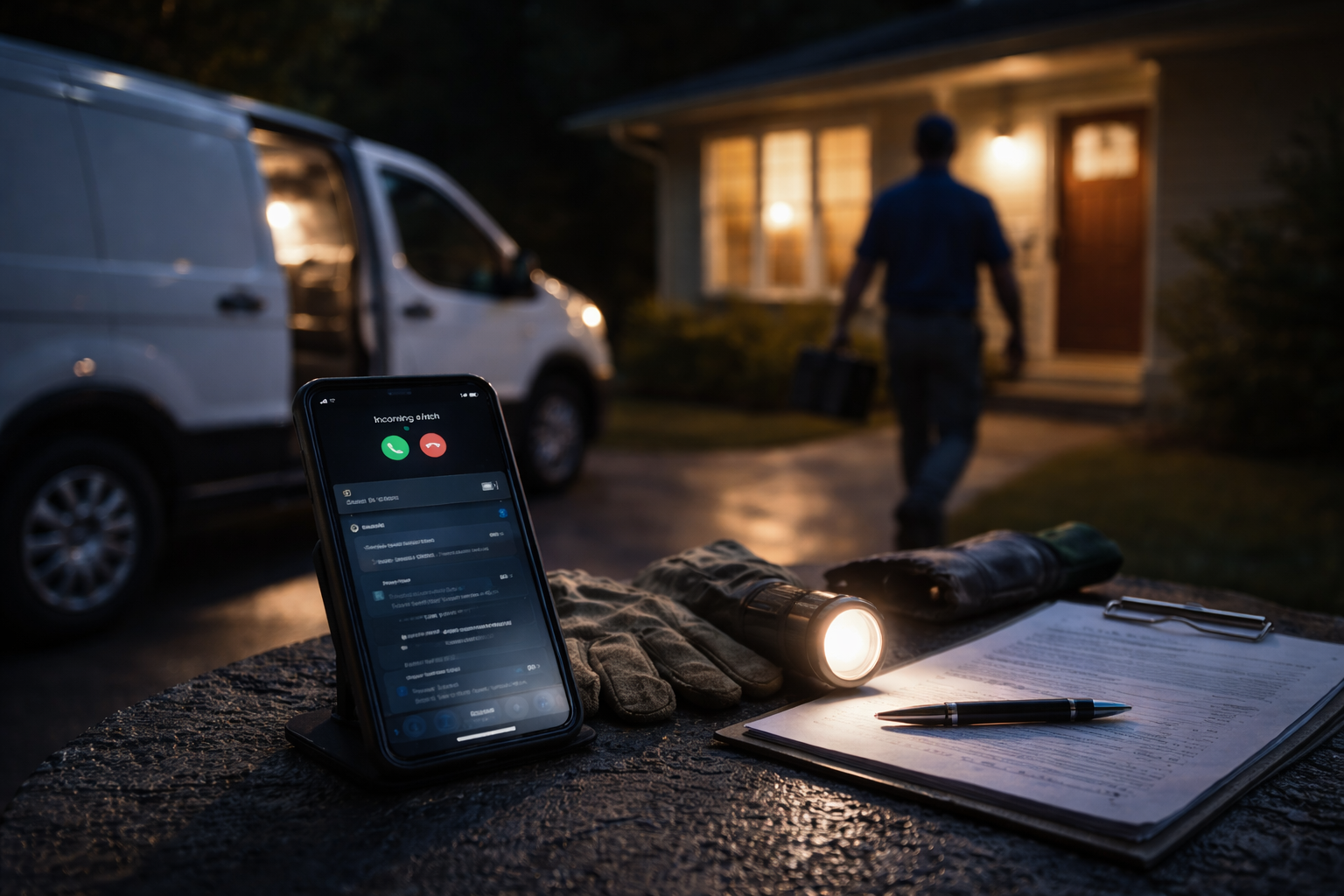
A burst pipe at 2 AM doesn't care about business hours. Neither does a broken AC on the hottest day of summer nor a roof leak during a storm. When homeowners face emergencies, they pick up the phone and start dialing. The first business that answers gets the job.
For home services companies, emergency calls represent the highest-value opportunities. They also happen at the worst possible times. That's where an emergency answering service becomes critical, especially one powered by AI that answers instantly, routes calls correctly, and captures every lead without requiring night shifts or overtime pay.
Why do emergency calls matter so much to home services businesses?
Emergency service calls command premium pricing. According to research cited by Destination CRM, about 80 percent of callers sent to voicemail don't leave messages because they don't think anyone will listen. When someone has water flooding their basement or no heat in winter, they won't wait for a callback. They'll move to the next contractor immediately.
Home services businesses lose thousands in revenue every month from missed after-hours calls alone. Emergency jobs typically pay 1.5 to 2 times standard rates, making each missed call especially costly. More importantly, customers who get help during emergencies often become loyal, long-term clients worth thousands over time.
The challenge is simple. Emergencies don't follow schedules, and most businesses can't afford to staff phones 24/7 with human teams.
What makes traditional answering solutions fall short?
Many home services companies try standard solutions that seem logical but create new problems.
1. Hiring night staff
Paying employees to cover after-hours calls gets expensive fast. A full-time human receptionist costs $35,000 to $45,000 annually, including benefits. Covering nights and weekends means multiple employees, pushing costs well above $100,000 yearly. For most small to mid-sized businesses, that's not realistic.
Read our full comparison of an AI receptionist vs a human receptionist.
2. Using voicemail
Voicemail fails because customers facing emergencies won't wait. They need help now, not tomorrow morning. When they hear "leave a message, and we'll call you back," they hang up and dial the next company.
3. Outsourcing to traditional answering services
Traditional answering services use live operators working from scripts. They can take messages but often can't answer technical questions, provide accurate pricing, or determine whether something is a real emergency or something that can wait. The quality varies widely, and per-call or per-minute pricing adds up quickly during busy periods.
These solutions either cost too much, miss too many calls, or deliver poor customer experiences.
How does an AI answering service handle emergency calls?
An AI answering service built for home services works differently from traditional options. It answers every call instantly, understands the context of home service emergencies, and routes calls appropriately without human intervention.
Here's how it works in practice.
Instant response
The AI picks up on the first ring, 24/7: no hold times, no voicemail, no missed calls. Customers get immediate attention the moment they call.
Smart triage
The AI asks the right questions to understand the situation. Is this an active leak or a scheduling question? Does the heater not work at all, or is it just running inefficiently? Based on the answers, it determines urgency and routes accordingly.
Automated appointment booking
For non-emergency calls, the AI checks availability and books appointments automatically. It integrates with your scheduling system to prevent double-bookings and confirms details with the customer before ending the call. This is exactly how AI booking systems work for home services when properly configured.
Emergency dispatch
When the AI identifies a true emergency, it immediately notifies the on-call technician via text, call, or whatever method you prefer. The technician gets all the relevant details, the customer's contact information, and the nature of the emergency without playing phone tag.
What features should you look for in a 24/7 answering service?
Not all AI answering services are built the same. When evaluating options for emergency call coverage, certain capabilities matter more than others.
- Industry-specific knowledge: The AI should understand your field; plumbing, HVAC, roofing, or pest control, and distinguish between issues like a running toilet versus a flooded basement.
- CRM and dispatch integration: Voice AI with CRM integration ensures every call is logged automatically, updates customer records, and syncs with dispatch software, eliminating manual data entry and lost information.
- Customizable call flows: The AI should follow your processes, asking the right questions, capturing needed info, and routing calls correctly.
- Real-time notifications: Instant alerts via text, email, call, or app ensure emergencies get immediate attention.
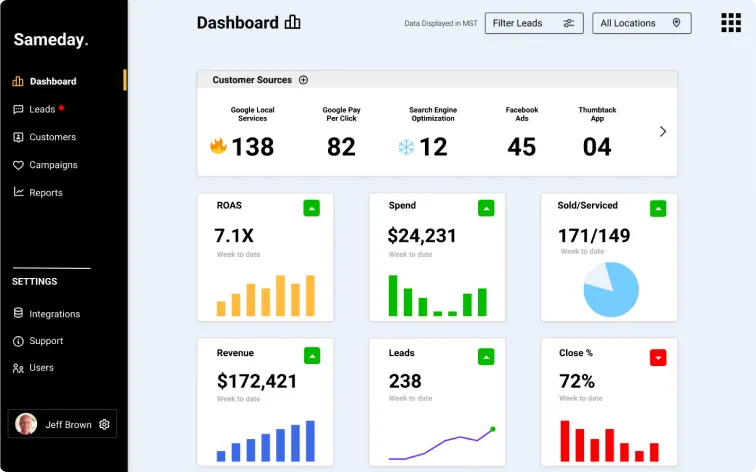
- Reporting and analytics: Track call volume, peak times, conversions, and missed opportunities to optimize staffing and measure ROI.
How does AI compare to human-staffed emergency services?
Both AI and human-staffed services can handle after-hours calls, but they work differently and cost differently.
For routine emergencies and bookings, AI handles the work faster and more consistently. For complex situations requiring human judgment, having escalation to a human team member remains valuable.
What's the ROI of implementing AI for emergency calls?
The return on investment comes from multiple sources, not just cost savings.
Captured revenue from after-hours calls
If you currently miss 10 emergency calls per month at an average value of $500 each, that's $5,000 in monthly revenue going to competitors. An AI answering service capturing those calls pays for itself many times over.
Lower staffing costs
Eliminating the need for night staff or reducing reliance on expensive answering services creates immediate savings. Even businesses that keep some human coverage can significantly reduce hours and overtime.
Higher customer satisfaction
Instant answers and professional handling build trust. Customers appreciate not being sent to voicemail, especially during stressful emergencies. Better experiences lead to more referrals and repeat business.
Improved team efficiency
Your team focuses on actual work instead of constantly answering phones. Automated phone systems for home services handle routine questions and booking, freeing technicians and office staff to do higher-value work.
What about after-hours answering for HVAC service specifically?
HVAC companies face unique challenges with emergency calls. No heat in winter or no AC in summer creates urgent situations where customers will pay premium rates for immediate service.
An after-hours answering service for HVAC needs to understand seasonal patterns, recognize true emergencies, and prioritize accordingly. During a heat wave, call volume spikes dramatically. The AI needs to handle that surge without missing calls or degrading service quality.
HVAC companies use AI phone answering to capture emergency calls because it scales instantly when needed and maintains consistent quality regardless of call volume.
The same principles apply to plumbing, roofing, electrical, and other home services where emergencies happen frequently and timing matters.
How does this compare to virtual receptionists?
Virtual receptionists offer a human touch but come with limitations. The best virtual receptionist for plumbing contractors might work well during business hours, but after-hours coverage gets expensive.
AI answering services provide consistent coverage at predictable costs. They don't take sick days, don't need breaks, and don't charge extra for nights or weekends. For emergency coverage specifically, AI's instant response time and unlimited capacity make it the better choice.
Some businesses use both. AI handles routine calls and after-hours coverage, while human receptionists manage complex situations requiring judgment or empathy.
Why businesses can't afford downtime on emergency calls
In home services, why businesses can't afford downtime comes down to simple math. Competitors are always one phone call away. When customers can't reach you, they reach someone else.
Emergency calls represent the highest-value, highest-margin work in home services. They also build the strongest customer relationships. The contractor who shows up at midnight to fix a broken heater earns loyalty that lasts for years.
Missing those calls means losing both immediate revenue and long-term customer value.
Getting started with an emergency answering AI service
Implementing an emergency answering service doesn't require complex technical knowledge or major changes to how you operate. The right provider makes it simple.
Start by evaluating your current situation. How many calls do you miss after hours? What's the average value of an emergency job? How much do you currently spend on answering services or overtime for staff coverage? Those numbers show you what you're losing and what you're spending. Compare that against the cost of AI for customer service designed for home services companies.
Most businesses find that AI answering pays for itself within the first month just from captured emergency calls. The additional benefits of better customer service, reduced stress on your team, and improved efficiency add even more value.
For home service businesses aiming to capture every opportunity and provide 24/7 support, AI-powered emergency answering is essential for staying competitive
Ready to stop missing emergency calls?
See how Sameday's AI answering service handles after-hours coverage, automates booking, and captures every lead without adding to your team's workload.
Book a free demo and let our AI answering service show you how it answers, books, and saves the day (even at 2 a.m.).

.svg)
.svg)