
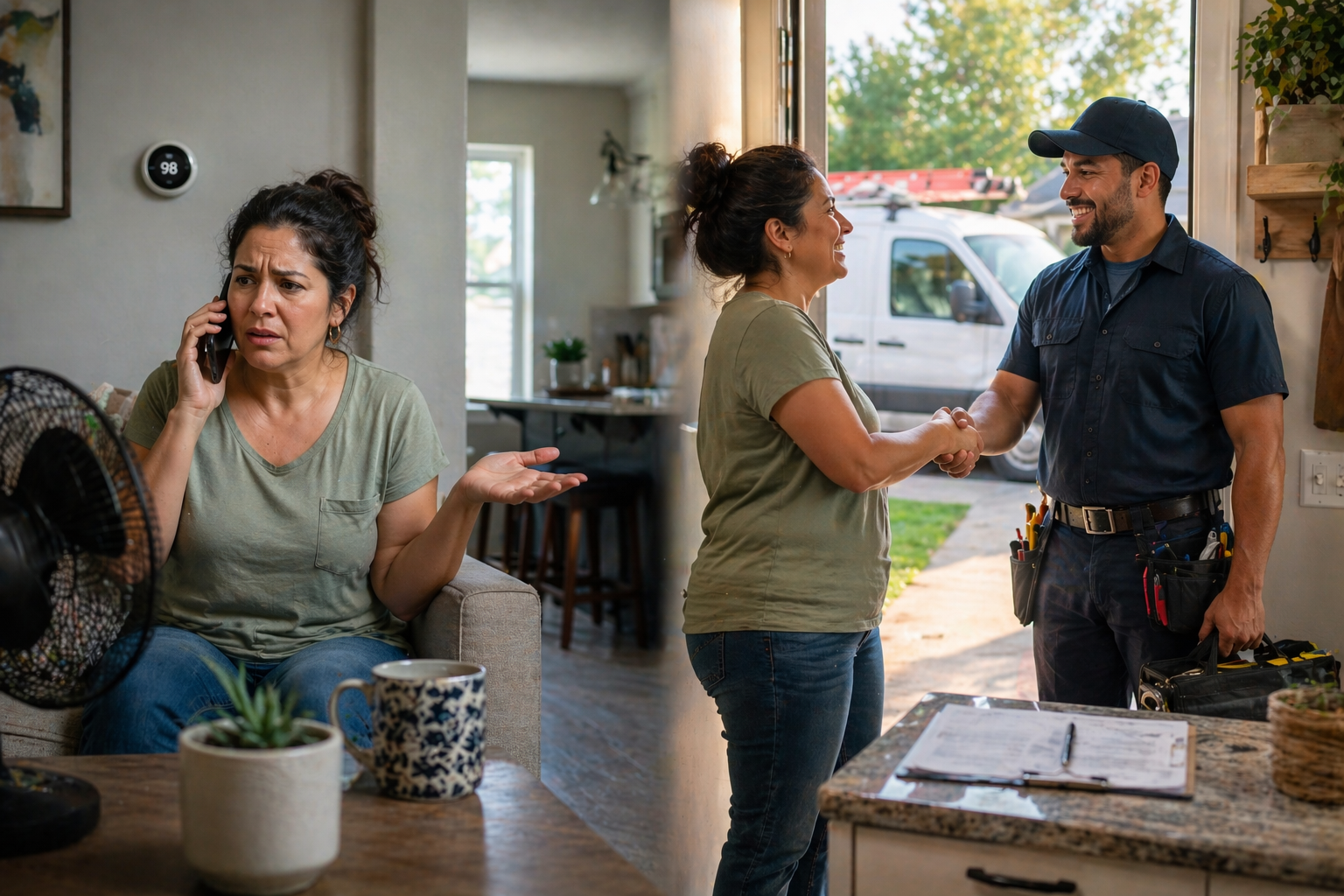
Mrs. Rodriguez calls three HVAC companies on a 98-degree afternoon. Her air conditioner stopped working. She speaks limited English and feels more comfortable in Spanish.
The first company answers in English. She tries to explain the problem, but struggles with technical terms. The person on the phone doesn't speak Spanish. She hangs up, frustrated.
The second company doesn't answer at all.
The third company answers immediately. The voice on the other end offers her to speak in Spanish, asks clear questions about her cooling system, and books a technician for that afternoon. The entire conversation happens in her native language.
Guess which company gets the job.
For home service contractors in areas with large Hispanic populations, language plays a direct role in whether you win that customer or lose them to a competitor who can communicate clearly. A Spanish-speaking AI answering service solves this without hiring bilingual staff or outsourcing to call centers.
TLDR
- 43.4 million people in the US speak Spanish at home, making it the second most common language in the country.
- Home service contractors without Spanish language support miss 15-25% of potential customers in Hispanic-majority markets.
- Bilingual AI receptionists handle calls in both English and Spanish with automatic language detection.
- Spanish-speaking customers report higher satisfaction and booking rates when they can communicate in their native language.
- Implementation requires translating your service menu, pricing structure, and common questions into proper Spanish, not just Google Translate versions.
The market you're missing without Spanish capability
According to the US Census Bureau, Hispanics represent 19.1% of the total US population, and that number continues to grow. In states like California, Texas, Florida, Arizona, and New Mexico, the percentage is significantly higher, often exceeding 40% in major metropolitan areas.
They’re Spanish-speaking homeowners looking for plumbing, HVAC, electrical work, roofing, pest control, and cleaning services.
They're property managers overseeing multiple buildings. They're small business owners who need commercial maintenance.
When these customers call for service and can't communicate clearly in English, three things usually happen:
1. They book with the first contractor who speaks Spanish: A Spanish-speaking AI receptionist creates instant trust. A customer who can explain their problem clearly and understand the solution feels more confident about the service they're getting.
2. They pay more for convenience: Bilingual contractors in underserved markets can charge premium rates because they're solving a real accessibility problem. If you're competing on price alone while Spanish-speaking competitors are competing on communication, you're in the wrong race.
3. They refer within their community: Hispanic customers tend to share recommendations within tight-knit networks. One satisfied customer can turn into 10 referrals from neighbors, family, and friends. But that network effect works both ways; if they have a bad experience because of language barriers, the word spreads just as fast.
What an automated phone system with Spanish support actually does
Bilingual AI phone answering for contractors doesn't just translate words. It handles complete service workflows in Spanish from start to finish.
Automatic language detection
The system recognizes whether a caller is speaking English or Spanish within the first few seconds and switches accordingly. Customers don't need to press 1 for English or 2 for Spanish. The conversation just happens in whichever language they're using.
Full-service booking in Spanish with an AI booking system
The AI walks through the entire booking process:
- "¿Qué tipo de servicio necesita?" (What type of service do you need?)
- "¿Cuál es su dirección?" (What's your address?)
- "¿Cuándo le gustaría que vayamos?" (When would you like us to come?)
- "¿Es una casa o un negocio?" (Is this a home or business?)
Every step happens in natural, conversational Spanish. Pricing quotes, availability windows, and service descriptions are all delivered in the customer's language.
Proper Spanish, not machine translation
There's a difference between Spanish that sounds right to a computer and Spanish that sounds right to a native speaker. Regional variations matter. A Puerto Rican homeowner and a Mexican-American business owner don't speak identically, but both recognize when phrasing sounds natural versus robotic.
Quality AI receptionist for contractors uses language models trained on real conversations, not just dictionary translations. The difference shows up in customer comfort and booking conversion.
Voicebot Implementation: what to prepare before launching Spanish support
Most contractors rush this part and end up with a bilingual system that creates more confusion than it solves. Here's what needs translation and cultural adaptation before you go live.
Your complete service menu
Every service you offer needs a proper Spanish name and description. Don't rely on Google Translate. Work with a native speaker who understands both the language and the industry.
- "Air conditioning repair" → "Reparación de aire acondicionado"
- "Drain cleaning" → "Limpieza de drenaje"
- "Electrical panel upgrade" → "Actualización de panel eléctrico"
The terminology has to be precise. Technical terms exist in Spanish, but they vary by region. What works in Texas might sound odd in Florida.
Pricing and payment terms
How do you explain your pricing structure in Spanish? Hourly rates, flat fees, diagnostic charges, and emergency surcharges need clear Spanish phrasing that matches how you communicate in English.
Payment methods also need translation: "tarjeta de crédito" (credit card), "cheque" (check), "efectivo" (cash). If you require deposits, explain it clearly: "Se requiere un depósito del 50%" (A 50% deposit is required).
Common questions and FAQs
What questions do Spanish-speaking customers ask most often? Understanding how to build an AI receptionist knowledge base for bilingual support means anticipating both language-specific and service-specific questions.
Examples:
- "¿Cobran por venir a ver el problema?" (Do you charge to come look at the problem?)
- "¿Cuánto tiempo toma la reparación?" (How long does the repair take?)
- "¿Tienen licencia y seguro?" (Are you licensed and insured?)
- "¿Ofrecen garantía?" (Do you offer a warranty?)
These questions need scripted answers that sound natural, not copied from a textbook.
What bilingual AI handles vs. when you need human translators
Not every Spanish-language interaction should be automated. Here's a practical breakdown:
The key is matching complexity to capability. AI excels at structured conversations where the path is predictable. Humans handle nuance, emotion, and situations that require real-time judgment.
When evaluating whether your current setup is working, reviewing the checklist for evaluating your phone answering service helps identify gaps that bilingual AI could fill.
What this means for your business growth
Contractors who add Spanish-speaking capability see three immediate impacts:
- Higher booking rates in Hispanic markets: Customers who can communicate easily are more likely to complete the booking. Research from Common Sense Advisory found that 76% of consumers prefer to buy products with information in their native language, and 40% will never buy from websites in other languages. Home services follow the same pattern.
- Lower customer acquisition cost: You're competing in a less saturated market. While every other contractor fights over English-speaking leads, you're also capturing Spanish-speaking homeowners who have fewer accessible options.
- Better customer retention and referrals: Language accessibility builds loyalty. A customer who feels understood and respected is more likely to call you for future work and recommend you to others.
Looking at the real ROI of AI answering services shows that bilingual capability amplifies returns by opening up market segments that were previously inaccessible.
Getting the handoff right between AI and human support
When a Spanish-language call needs to transfer to a human, that person should continue the conversation in Spanish without making the customer switch languages or repeat information.
If your field team doesn't include Spanish speakers yet, you have three options:
- Hire bilingual technicians: This solves the language gap completely but takes time and may limit your hiring pool.
- Partner with translation services for complex calls: Keep AI handling routine bookings, but route complicated situations to a professional translation service.
- Use AI for booking, English-speaking techs for service: Many Spanish-speaking customers are comfortable with English for face-to-face interactions but prefer Spanish for phone bookings. The AI handles the call, sends appointment details in Spanish, and the tech communicates in English on-site.
The best approach depends on your market density and customer expectations. Understanding how to combine AI and human strengths helps you decide which model fits your operation.
Choosing the right bilingual AI system
Not all AI phone systems handle Spanish equally well. When comparing options, ask:
- Does it support automatic language detection or require manual selection?
- How does it handle code-switching (when customers mix English and Spanish)?
- Can you customize vocabulary for regional variations?
- Does it integrate with your scheduling system in both languages?
- How quickly can you update Spanish scripts when your services change?
Reviewing the best virtual receptionist options shows that systems built specifically for home services tend to handle bilingual support better than generic business AI tools.
Spanish language support as a competitive advantage for home services
The home service contractors growing fastest in Hispanic markets are not treating Spanish as an afterthought. They're using it as a core part of their customer experience strategy.
Lead capture Voice AI for home services that speaks both English and Spanish means you're accessible to everyone in your service area, not just the English-speaking majority. That accessibility translates directly to market share.
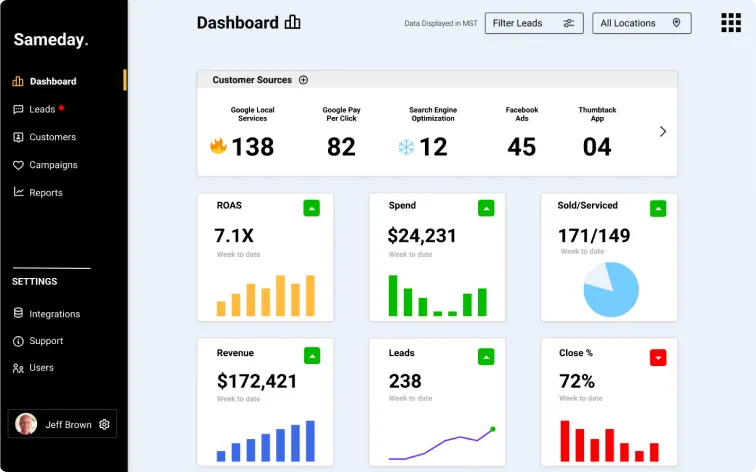
See how Sameday's bilingual AI answering service works for contractors serving diverse communities and book a demo to hear it in action.

.svg)
.svg)